All staff are trained and certified by the International Board of Undersea Medicine (IBUM).
Click here to learn more

Everyday health in Brighton & Hove

There’s more to health than fixing what’s wrong.

You don’t need to be recovering from an injury, managing a condition or training for a marathon to have a reason to come to Breathe.

Sometimes, you simply want to look after yourself. To feel a little sharper, understand your health better, take care of your skin or make more time for yourself. Perhaps you’re thinking about getting older and what you can do today to give yourself the best chance of staying active, independent and engaged with life for years to come.

Scroll to explore the science

The science of ageing

What if ageing isn’t quite as fixed as we thought?

Ageing is something we all experience, but some of its most interesting changes happen at a scale we cannot see.

One study caught our attention in particular. It investigated what happened to two important markers of cellular ageing after a course of hyperbaric oxygen therapy.

01 · Your chromosomes

A lifetime of instructions, inside every cell.

Inside the nucleus of most of your cells is DNA, organised into structures called chromosomes. These contain the genetic instructions that help your body grow, maintain itself and carry out countless essential functions.

02 · The protective caps

Meet your telomeres.

At the ends of your chromosomes sit protective structures called telomeres. Think of them like the little plastic tips on your shoelaces, helping to protect the ends from damage and keeping everything in place.

03 · Over time

Those protective caps can get shorter.

Every time many of our cells divide, their telomeres become a little shorter. It’s a normal part of life, influenced by a mixture of biological processes, genetics and environmental factors.

Because of their relationship with cellular ageing, telomeres have become an important area of scientific research.

04 · Cellular senescence

What happens when a cell grows old?

As cells accumulate damage or reach certain limits, some enter a state called senescence. They stop dividing but can remain in the body, sometimes releasing inflammatory signals that influence the surrounding tissue.

Understanding these cells, and how they change as we age, is one of the most interesting areas of longevity research.

05 · The research

And then researchers tried something interesting.

In 2020, researchers studied 35 healthy adults aged 64 and over who completed 60 hyperbaric oxygen sessions over three months.

Following treatment, they reported two particularly interesting findings:

+20%More than a 20% increase in average telomere length in several types of circulating immune cells.
−37%Approximately 37% fewer senescent T-helper cells measured after the treatment course.

More than recovery

What would you like more of?

Looking after yourself doesn’t always begin with a particular symptom or diagnosis. Sometimes it’s a feeling that you’d like to invest a little more in yourself, your health and the years ahead.

Everyone arrives at Breathe with their own reasons. Here are a few of the things people are curious about.

01 · Clarity and concentration

A little more room to think.

Your brain works hard every day, whether you’re solving problems, learning something new or simply trying to keep up with everything life throws at you.

Research into oxygen, cerebral blood flow and cognitive function is uncovering some intriguing possibilities, particularly in healthy older adults.

Hyperbaric oxygen and brain health

02 · Sleep and feeling settled

Making space to switch off.

Good sleep has an extraordinary influence on how we feel, think and function. Yet finding time to properly unwind can be surprisingly difficult.

At Breathe, we’re interested in the relationship between rest, the nervous system and everyday health, including research into Alpha-Stim, light-based therapies and sleep.

Sleep, rest and Alpha-Stim

03 · Skin and everyday confidence

Feeling comfortable in your own skin.

Your skin is constantly renewing and responding to the world around you. Research into red and near-infrared light has explored its relationship with collagen, skin texture and the visible signs of ageing.

It’s an interesting field, particularly for people who want to approach skin health with curiosity rather than a complicated collection of products and promises.

Red light therapy

04 · Understanding your health

Know a little more about yourself.

You can feel perfectly well and still have questions about what’s happening beneath the surface.

From blood markers and fitness to genetics and aspects of metabolism, carefully chosen testing can help you understand certain parts of your health and make more informed decisions about what to focus on.

The important part isn’t collecting numbers. It’s understanding which ones are genuinely useful to you.

Health and performance testing

Looking ahead

The science of staying well is getting interesting.

We’re used to thinking about oxygen as something we breathe, but its role goes much further than that.

Oxygen is essential to the way most of our cells produce energy. It supports the extraordinary amount of work happening throughout your body every second, from the muscles that keep you moving to the brain that allows you to think, remember and experience the world.

As we get older, the way our blood vessels function, how our tissues receive oxygen and how efficiently our cells produce energy can change. These processes are complex, and ageing doesn’t simply mean that every cell receives less oxygen, but they help explain why scientists are so interested in oxygen’s relationship with healthy ageing.

Hyperbaric oxygen therapy offers researchers a way of investigating that relationship. By breathing oxygen at increased atmospheric pressure, more oxygen can dissolve into the blood plasma, changing how oxygen is delivered to tissues.

And researchers are beginning to investigate what repeated exposures might mean for people who are already healthy.

The study

What happens when researchers study healthy brains?

In a 2020 randomised controlled trial, 63 healthy adults over the age of 64 took part in research examining the effects of hyperbaric oxygen therapy on cognitive function.

63

Healthy older adults

All over the age of 64, none recovering from a brain injury or being treated for dementia.

60

Sessions

A structured course over approximately three months, compared with a control group.

3 months

Measured changes

Improvements in attention and information-processing speed, and increased blood flow in certain regions of the brain.

After a course of 60 sessions, the treatment group showed improvements in cognitive testing compared with the control group, particularly in attention and information-processing speed. Researchers also observed increased blood flow in certain regions of the brain.

What makes this research interesting is that the participants weren’t recovering from a brain injury or being treated for dementia. They were healthy older adults, and the researchers were interested in how cognitive function might respond to hyperbaric oxygen as part of normal ageing. The findings have opened up interesting avenues for further research into cognitive health, circulation and the biological processes involved in ageing.

Research note. Hadanny et al., Aging, 2020. Randomised controlled trial involving 63 healthy older adults. The treatment course used 60 sessions at 2.0 ATA with 100% oxygen, which differs from Breathe’s standard 1.5 ATA sessions. The study examined cognitive performance and brain blood flow, not disease prevention.

A series, not a single visit

Why repeated sessions matter

Something worth understanding about this area of research is that scientists are studying what happens across a series of exposures, rather than just a single visit.

Both the cognitive trial and the telomere study followed structured courses of 60 sessions over approximately three months.

Researchers are interested in whether repeated changes in oxygen exposure can influence processes involved in cellular adaptation, blood flow and tissue function. Understanding how these responses develop, and which approaches produce meaningful benefits, is an important part of the research still taking place.

At Breathe, this is part of why we take a considered approach to regular treatment. We help people understand the research, the differences between study methods and our own equipment, and what a sensible routine might look like for them.

What’s especially exciting is that this research is looking beyond recovery from illness or injury. It’s exploring how healthy bodies function as they age, and whether certain biological processes can be supported or influenced along the way.

We’re interested in where that science leads, and in helping people understand it as the evidence develops.

Real people, real reasons

Everyone has their own reason for coming back.

There isn’t one type of person who comes to Breathe.

Some people arrive with a particular goal in mind. Others are interested in the science, enjoy having an hour to themselves or simply appreciate the routine of taking time out of a busy week.

What they share is an interest in looking after themselves, whatever that means to them. We think those personal reasons are just as important as the technology.

A little perspective

We’re not trying to live forever. We’re trying to live well.

There’s a lot of conversation about longevity, biohacking and finding ways to optimise practically every part of being human.

And truthfully, we find much of the science fascinating. We love learning about mitochondria, oxygen, cellular repair and the remarkable complexity of the human body. It’s a big part of why Breathe exists.

But we also believe that some of the best things you can do for yourself are beautifully ordinary.

Getting outside for a walk. Eating something nourishing. Having a proper night’s sleep. Moving your body because it feels good. Spending time with people who make you laugh until your stomach hurts.

You don’t need to measure every moment of your life to make it count.

We believe advanced therapies and the fundamentals of good health can sit comfortably alongside one another. There’s room to explore exciting science without forgetting the simple things that have always mattered.

Because the point of looking after yourself isn’t to spend every waking minute thinking about your health.

It’s to feel well enough to enjoy everything else.

Find your way in

Different therapies. Your reasons.

There’s no single way to experience Breathe. We’ll help you explore the options and find something that makes sense for you, whether that’s a particular interest in the science or simply wanting to build a little time for yourself into your week.

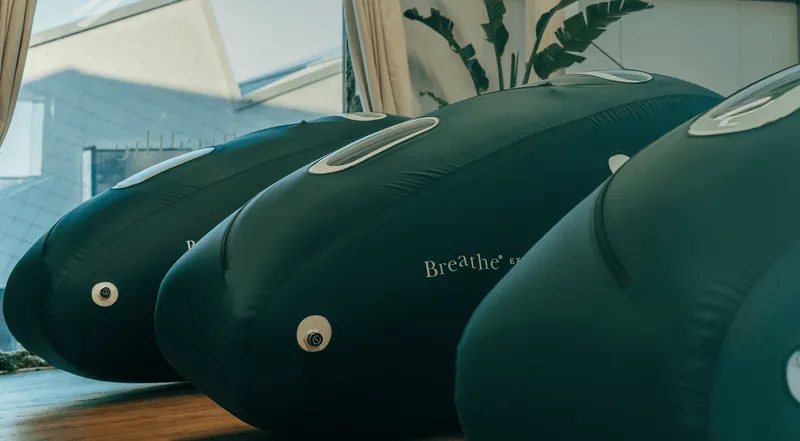
The hyperbaric chamber at Breathe

Hyperbaric oxygen therapy

A different environment for oxygen.

Relax in one of our purpose-designed chambers while breathing oxygen under increased atmospheric pressure. Explore the science of oxygen delivery, cognitive function and healthy ageing, with an approach that considers your individual circumstances.

The full-body red light bed at Breathe

Red light therapy

Light, with a purpose.

Our full-body red and near-infrared light bed makes it easy to explore photobiomodulation, a growing area of research investigating how particular wavelengths of light interact with the body, including studies involving skin health.

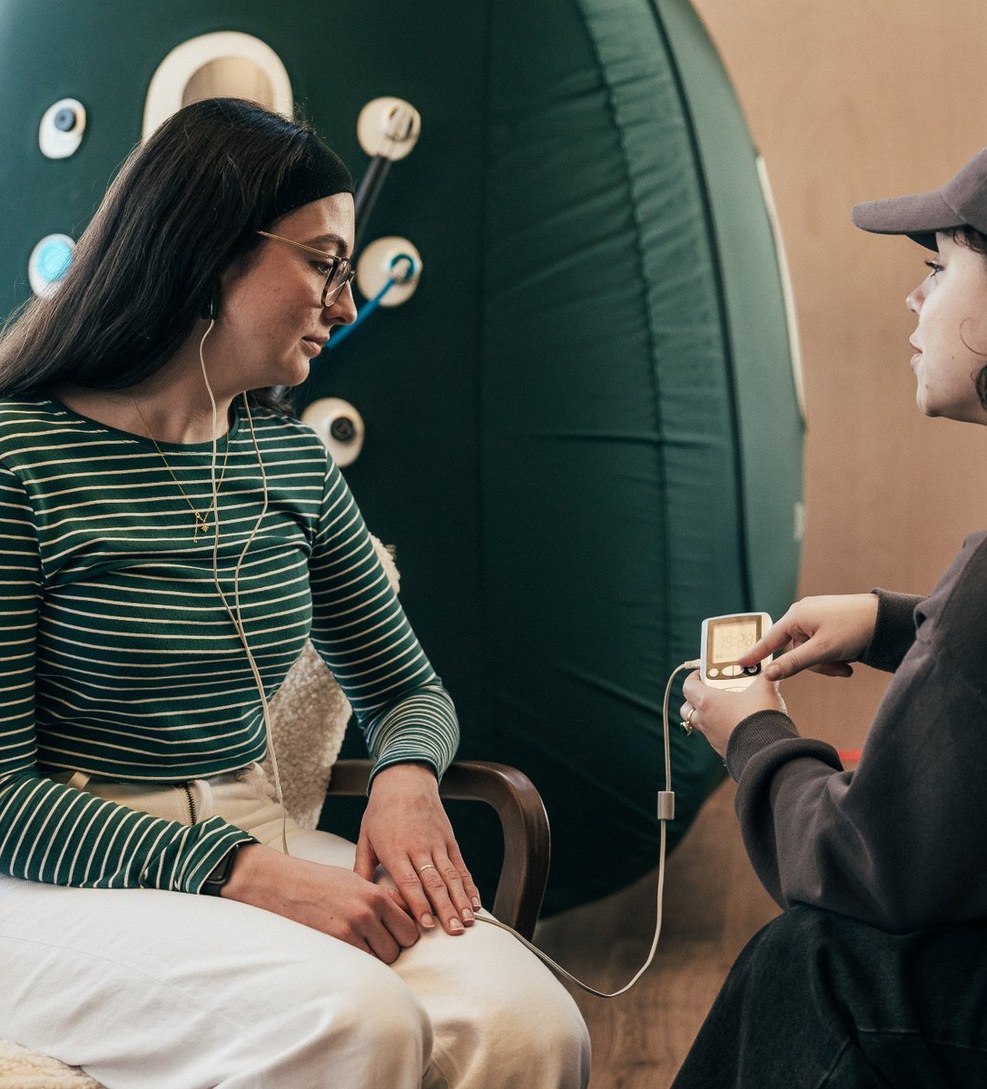
An Alpha-Stim device

Alpha-Stim

A quieter moment for your mind.

A small, non-invasive device delivering gentle electrical stimulation, with research examining its use in anxiety and insomnia. For suitable members, it’s another option to explore when rest and feeling settled are priorities.

A member of the Breathe team

Health and performance testing

A clearer picture of you.

From blood testing to fitness assessments and genetic insights, we can help you explore useful ways of learning more about your health. We focus on tests that have a meaningful purpose, rather than measuring things simply because we can.

Our evidence library

Curious? Good. So are we.

There’s an extraordinary amount of research being published into oxygen, light, the brain and the biology of ageing, and we’re continually learning more.

Our Library brings that research together so you can explore it for yourself, understand what scientists actually studied and see how strong the evidence is. Where the research is established, we’ll say so. Where it’s still developing, we’ll be just as clear.

We believe the science is far more interesting when you can see the whole picture.

Good to know

A few things you might be wondering.

Not at all. Plenty of people are interested in looking after their general health, exploring new research or simply making time for themselves. You don’t need a particular diagnosis or a dramatic reason to be curious about what we do. We’ll still complete the appropriate screening and consultation before treatment.

Researchers are investigating the role of HBOT in several aspects of health and ageing, including cognitive function and cellular biology. Those studies are interesting, although preventing disease in otherwise healthy people hasn’t been established as a benefit of regular HBOT. Our Library explains what the research has actually measured.

One 2020 study reported changes in telomere length and cellular senescence markers in certain immune cells after a course of HBOT. It’s an exciting direction for further research, although these findings don’t establish that treatment reverses ageing or extends lifespan. You can explore the study, including its methods and limitations, in our Library.

Many research studies involve repeated sessions over several weeks or months, rather than occasional treatments. There isn’t a proven maintenance schedule for healthy ageing, so we’ll help you understand the evidence, discuss your interests and explore whether a regular routine makes sense for you.

That depends on your interests, health history and what you’d like to explore. Some people are particularly interested in HBOT research, while others begin with red light therapy or ask about Alpha-Stim. We can talk you through the differences and help you make an informed choice.

Yes, where they’re suitable for you. We offer several therapies that can be explored individually or alongside one another. We’ll look at what makes sense for your interests and circumstances rather than recommending everything at once.

No. Testing is an optional part of what we offer and isn’t a general requirement for booking therapy. If there’s something specific you’d like to understand about your health, we can discuss which tests may be useful and what their results can actually tell you.

We’ll begin with a consultation to understand your health history, answer your questions and make sure your chosen therapy is appropriate. You’ll have an opportunity to see the space, get comfortable with the equipment and understand what to expect. There’s no pressure to commit to a long-term plan.

We offer individual sessions, treatment packages and membership options. We’ll explain the current prices and help you find an approach that works for your interests and routine. You don’t have to join a membership to experience Breathe.

Your next chapter

Make time for feeling good.

You don’t have to wait until something goes wrong to take an interest in your health.

Whether you’re curious about the science, thinking about the years ahead or simply want to make a little more room for yourself, we’d love to welcome you to Breathe.

Come and see the space, meet the people behind it and explore what feels right for you.

Thoughtful therapies. Interesting science. And a little more time for yourself.