






Red Light Therapy in Brighton & Hove
Red light. Properly dosed.
A face mask or home panel can emit red light, but that doesn’t mean it’s delivering an effective dose. Photobiomodulation is about wavelength, irradiance, coverage and exposure time.
At Breathe, we tailor all four to you.
Courses start at £99 for five sessions, with red light also included in selected Breathe memberships.
See pricing
Red Light Therapy in Brighton & Hove
Red Light. Properly Dosed.
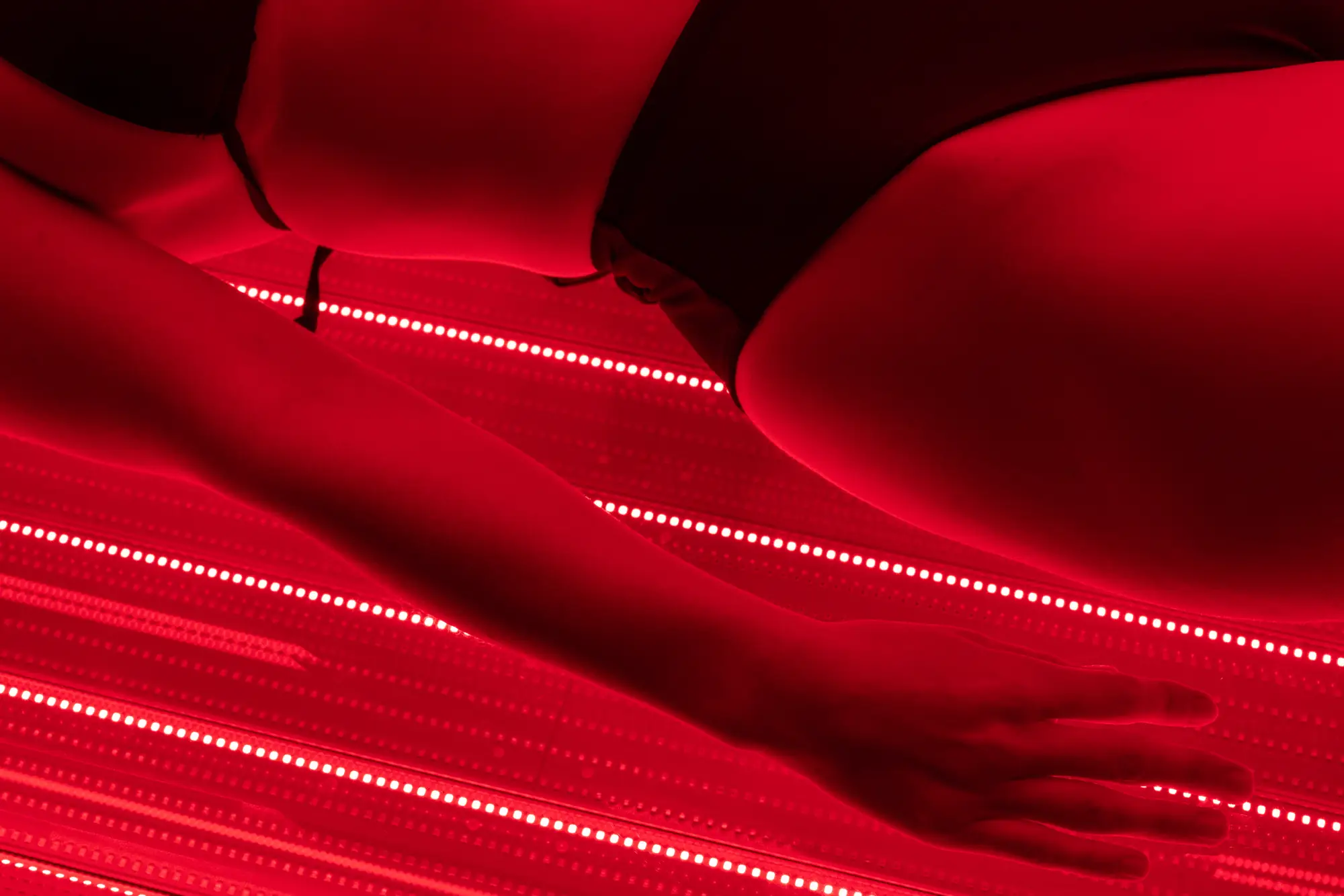
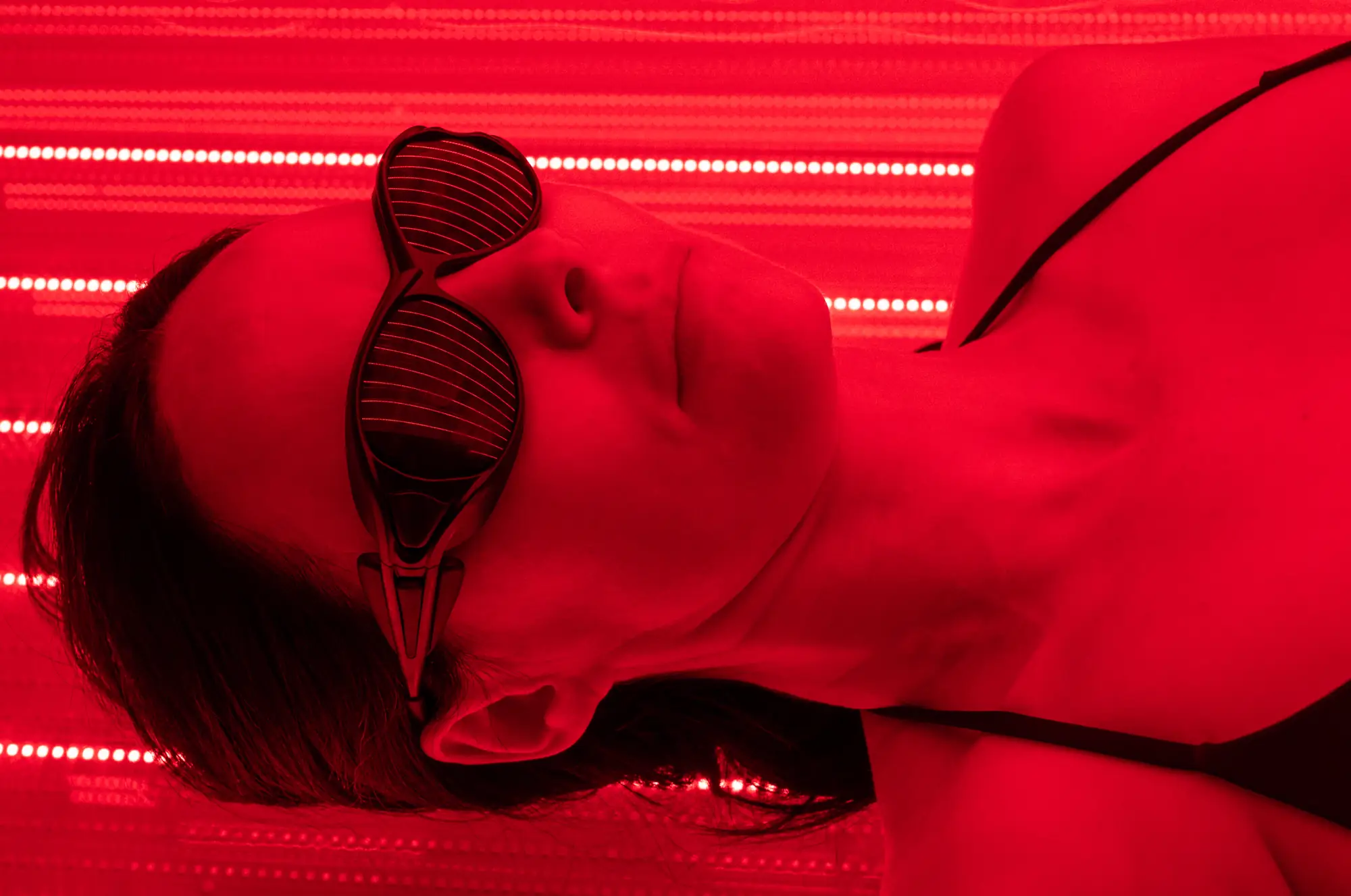
Our full-body red light bed delivers red and near-infrared light from head to toe, above and below. We take the time to understand what brings you here, then tailor the wavelengths, pulsing and session length around your needs.
Your intro session comes with a consultation.
Red light therapy in Brighton & Hove
Red Light. Properly dosed.
Our full-body red light bed delivers red and near-infrared light from head to toe, above and below. We take the time to understand what brings you here, then tailor the wavelengths, pulsing and session length around your needs.
Your intro session comes with a consultation.
Scroll to switch on the light
Follow the light
01 · Where energy is made
Small structures. A considerable workload.
Inside almost every cell are mitochondria. They turn energy from food into ATP using oxygen, supplying the energy your cells need to do their work.
02 · The light arrives
Meet one of light’s molecular targets.
Red and near-infrared light can reach your cells and interact with cytochrome c oxidase, an enzyme in the mitochondria’s inner membrane. It plays a part in the process that powers your cells.
03 · What may change
A little more room to work.
Nitric oxide can bind to this enzyme and slow its activity. One proposed explanation is that light helps release it, allowing the enzyme to work more freely.
04 · The chain moves
A tiny process with a powerful purpose.
As electrons move along a chain of proteins, protons are pumped across the inner membrane. This builds the stored energy needed for the next step.
05 · The output
Meet ATP. Your cells spend it all day.
Protons flow back through ATP synthase, a molecular machine that uses their movement to make ATP. Researchers study how light may influence this energy production and what that means for tissue function and repair.
What is it? And what does it do for me?
Scroll through the animation to understand red light therapy.
Inside almost every cell
Mitochondria turn food and oxygen into ATP, the molecule your cells actually spend. A single muscle cell can hold thousands of them.
Red light reaches an enzyme
Red and near-infrared light passes into tissue and is absorbed by cytochrome c oxidase, an enzyme sitting in the inner membrane. Researchers describe it as the main light-absorbing site.
Nitric oxide lets go
The leading explanation is that nitric oxide resting on that enzyme is displaced, freeing the site it was occupying. This is a proposed mechanism rather than a settled one.
Electrons flow again
Electrons pass along the inner membrane and protons are pumped across it, building the gradient that drives the last step.
Energy, as ATP
The gradient turns ATP synthase and more ATP becomes available to the cell. What that means for any one member is a separate question, and the evidence below is where we answer it.
What brings you here?
Start with what matters to you.
Perhaps you’re interested in your skin, looking into recovery or wondering whether red light has a place in looking after a particular concern. Tell us what you’re hoping for. We’ll help you understand where it could fit.
Skin and collagen
Red light has been studied for changes in skin texture, fine lines and collagen density, with encouraging results in controlled trials. We’ll talk through what those findings could mean for your goals.

Recovery and physical comfort
Muscle recovery and joint discomfort are also areas of research. The equipment and approach vary, so we’ll help you understand which findings are relevant to the full-body treatment we offer.
Something more specific?
Bring your questions. Our Library is organised by therapy and condition, and we’re happy to help you find the studies that relate to you.
Below the surface
Red for the surface. Near-infrared for deeper tissue.
Different wavelengths travel through tissue differently. Red light is absorbed closer to the surface, while near-infrared generally reaches further. Our bed combines five wavelengths: 633, 660, 810, 850 and 940 nm.
Red and near-infrared overlap in the tissues they reach. Skin, fat and muscle absorb and scatter light, so the amount available decreases with depth. This is an illustration, rather than a map of an exact treatment dose.
Red light · 633 + 660 nm
These wavelengths are used to target the skin and other superficial tissue, including the layers where collagen is produced.
Near-infrared · 810 + 850 + 940 nm
Near-infrared can reach further into underlying tissue. How much reaches a particular area depends on the wavelength, the tissue and its depth.
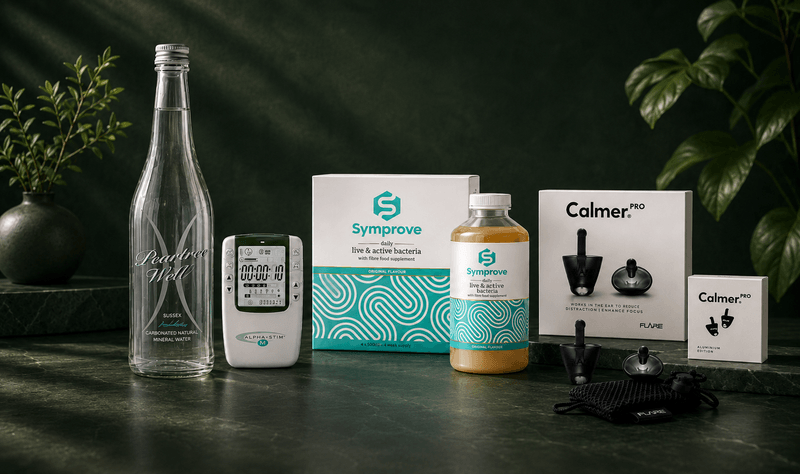
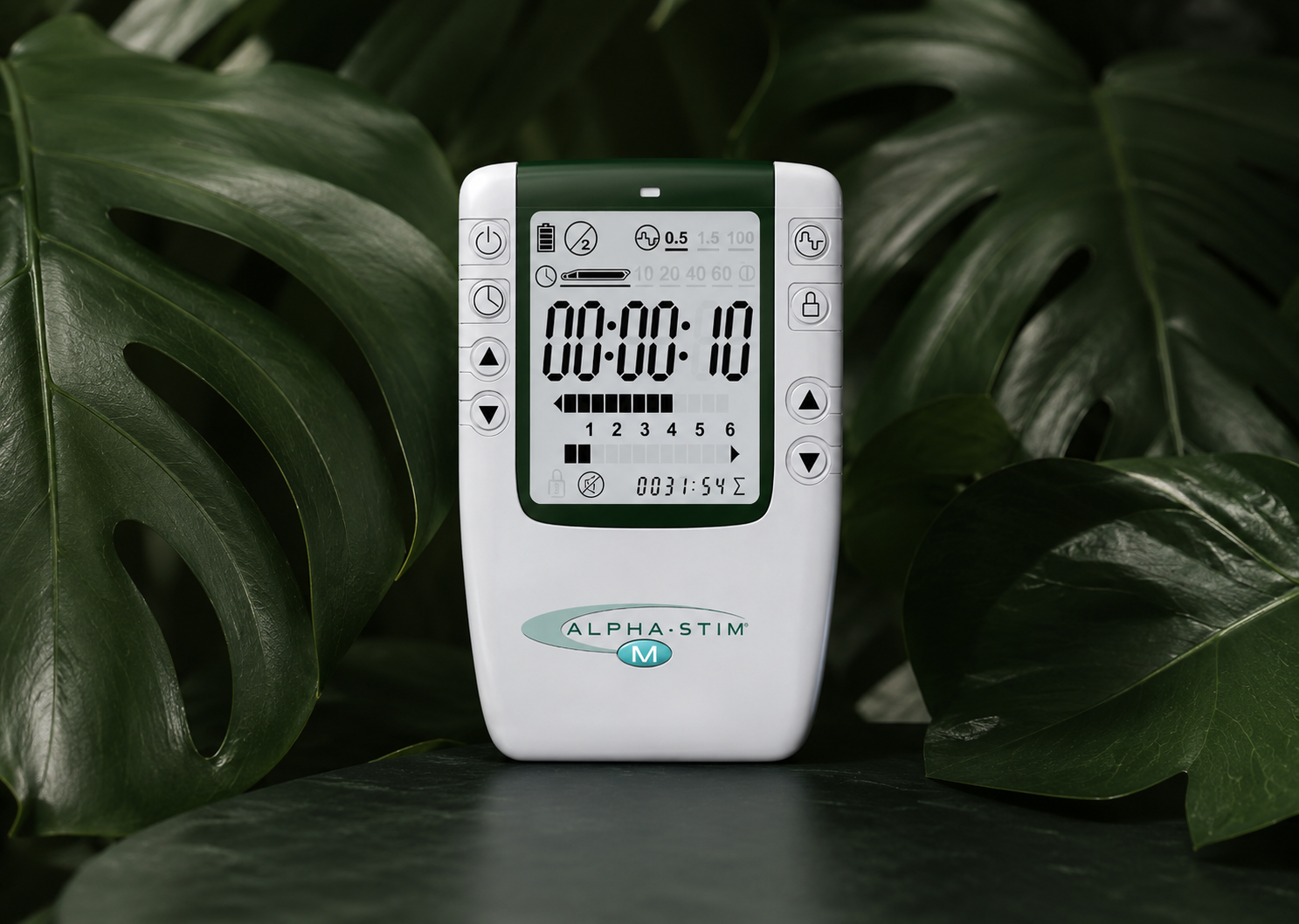
Adding Alpha-Stim
Add a whole new level of calm to your red light session with Alpha-Stim.
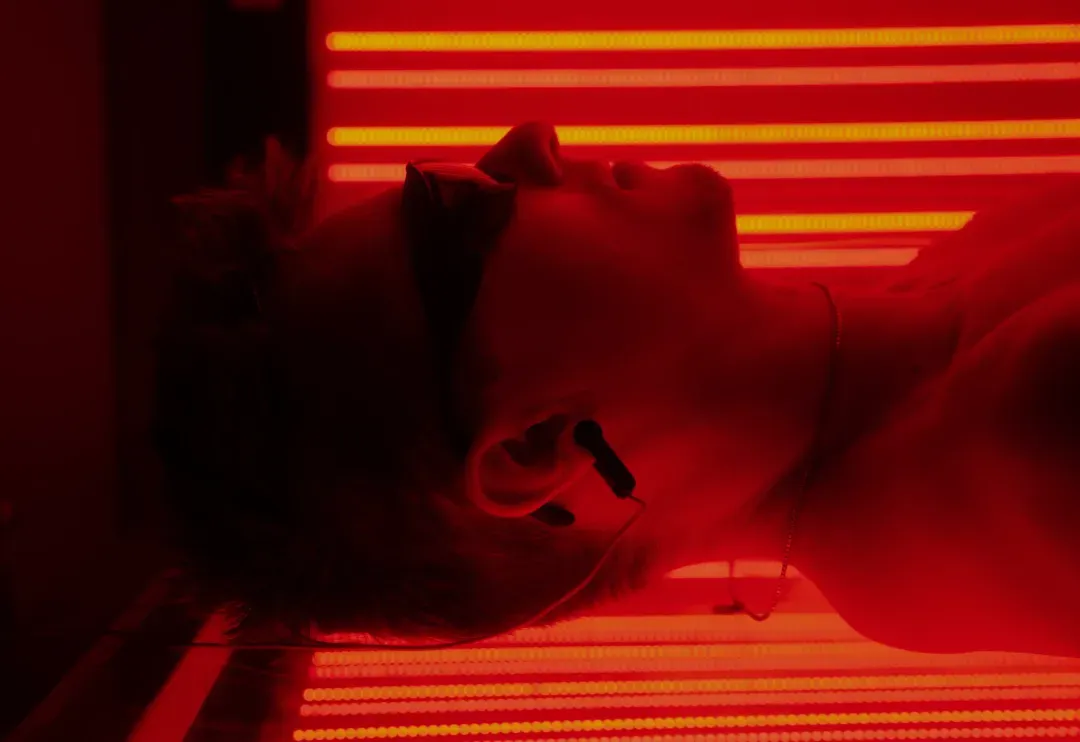
You can use Alpha-Stim while you’re in the red light bed. Once you’ve had a separate Alpha-Stim consultation and know how to use it, we can arrange both during the same visit.
Alpha-Stim adds another layer of relaxation. Gentle electrical stimulation through ear clips to help ease anxiety, while your red light session takes care of the light.
We’ll fit the ear clips and help you get comfortable before your red light session begins. Ask when booking so we can allow enough time for both.
The dose
More light isn’t always better.
The amount of light matters as much as the wavelength. Too little may have little effect; increasing the dose beyond a useful range can reduce the response. That range varies with the tissue and the purpose of treatment.
Two words worth knowing.
Irradiance is the light power reaching each square centimetre of your skin. Fluence is the energy delivered to that area over the session. Together, intensity and time determine the surface dose.
That’s why we consider the settings together, rather than simply turning everything up.
Explore the science in our LibraryThe research
For the part of you that wants to know why.
The research name for this is photobiomodulation. It covers how light interacts with living tissue, from changes inside cells to outcomes measured in people.
Our Library brings those studies together, organised by condition or purpose. Explore the findings, see how the treatment was delivered and follow the original papers. If something catches your attention, ask us. We enjoy this part.