





What they asked
This is an animal study in rats, not a study in women. Endometriosis is a condition in which tissue similar to the womb lining grows outside the womb, where it bleeds, inflames and scars with each cycle. Aydin and colleagues in Istanbul asked whether repeated hyperbaric oxygen exposure would shrink surgically created endometriosis implants in rats and calm the inflammation around them.
Who took part
Forty non-pregnant female Wistar-Albino rats. Each animal had a small piece of its own womb lining stitched onto the abdominal wall to create an artificial endometriosis implant, a standard laboratory model. They were then randomly divided into a treatment group of 20 and an untreated control group of 20. No humans were involved at any stage.
What they did
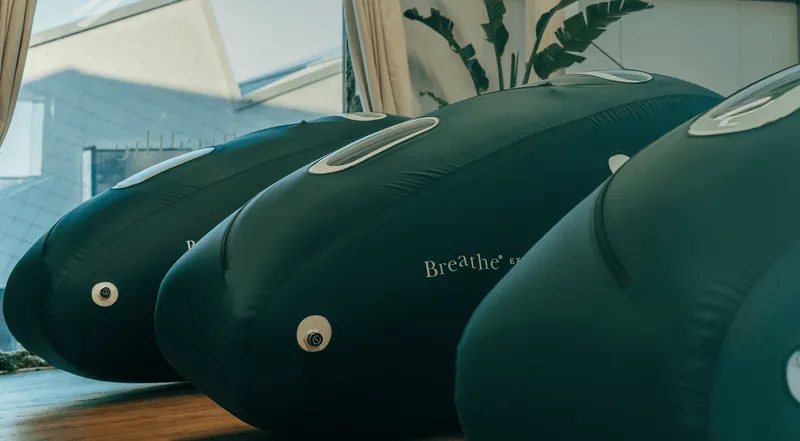
After the implants had been allowed to establish, the treatment group breathed 100 per cent oxygen in a hyperbaric chamber for two hours a day, every day, for six weeks. The abstract we had access to does not state the chamber pressure; the full paper describes a standard clinical pressure in the region of 2.5 ATA, but we could not confirm that figure directly. The control rats received no treatment. At the end of six weeks the implants were measured, removed and examined under the microscope, and fluid from the abdominal cavity was tested for the inflammatory messenger TNF-alpha. Ki-67, a marker of actively dividing cells, was also stained for.
What they found
Implants in the treated rats were substantially smaller: an average volume of 57 cubic millimetres compared with 95 in the untreated animals, a reduction of roughly 40 per cent. Microscopic scores of how healthy and active the endometriosis tissue looked fell from about 2.4 to 1.6 on the scale used. Ki-67 staining, which indicates cell proliferation, dropped from about 2.4 to 1.5. TNF-alpha in the abdominal fluid fell from about 8.2 to 5.3 picograms per millilitre. All of these differences were statistically significant. Again, these are findings in rats.
Why it might work
Endometriosis lesions thrive in a low-oxygen, inflamed environment. Low oxygen switches on signals (such as HIF-1-alpha and VEGF) that drive new blood vessel growth into the lesion and encourage its cells to keep dividing. Flooding the tissue with oxygen appears, in this model, to switch those signals down, reduce inflammatory messengers, and slow cell division. It is a plausible mechanism, but whether the same thing happens in a human pelvis over years of disease is unknown.
Limits
This is a rodent model with an artificial implant that does not fully mimic human endometriosis, which is chronic, hormonally driven and highly variable. Six weeks of two-hour daily sessions is a far heavier dose than most human protocols. There was no sham chamber exposure for the control rats, and it is not stated whether the pathologist was blinded. Pain, fertility and recurrence were not assessed. Forty animals is reasonable for a laboratory study but this is a single experiment from a single centre that has not, to our knowledge, been replicated in humans. Animal only: it cannot tell us what hyperbaric sessions do for women with endometriosis.