




Safety and efficacy of hyperbaric oxygen therapy for the treatment of interstitial cystitis: a randomized, sham controlled, double-blind trial
Read the paperWhat they asked
Interstitial cystitis, now often called bladder pain syndrome, causes persistent bladder pain, urgency and frequent urination without infection. Treatments are limited and often disappointing. Following an encouraging pilot study in 2004, van Ophoven and colleagues in Germany asked the harder question: is hyperbaric oxygen genuinely better than a convincing placebo when neither the patient nor the doctor knows which they are getting? Note that we worked from the abstract and reliable secondary reports rather than the full paper.
Who took part
Twenty-one adults with established interstitial cystitis who had not responded adequately to previous treatments. Fourteen were randomised to hyperbaric oxygen and seven to a sham exposure. Numbers this small were partly a reflection of how demanding the schedule was.
What they did
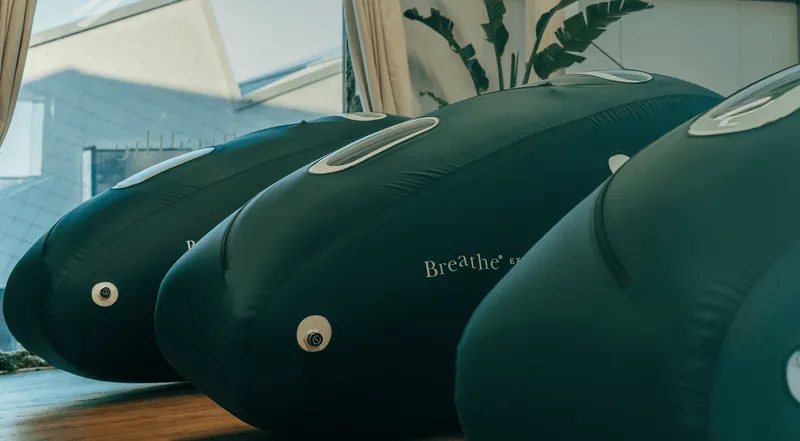
This was a randomised, double-blind, sham-controlled trial. The oxygen group breathed 100 per cent oxygen at 2.4 ATA for 90 minutes per session, 30 sessions over six weeks, in a multi-person chamber. The sham group sat in the same chamber and breathed ordinary air at a slight pressure of 1.3 ATA, enough to give the ear-popping sensation of a real dive without delivering a therapeutic oxygen dose. Only the chamber operator knew the allocation. The main measure was a seven-point Global Response Assessment, with supporting measures of pain and urgency on visual analogue scales, bladder capacity, 24-hour frequency and the O'Leary-Sant symptom and problem indices. People were followed at 3 months and then to 12 months.
What they found
At three months, 3 of the 14 oxygen-treated participants (21 per cent) were classed as responders on the global assessment, against none of the 7 in the sham group. Secondary reports describe pain and urgency dropping by roughly a third to a half among those who responded, with a pattern the authors called all-or-nothing: people who improved did so early and tended to hold the gain, while non-responders did not improve later. At 12 months, 5 of the 12 oxygen-treated participants still followed reported sustained improvement of varying degree. Ear barotrauma was the main side effect and there were no serious adverse events.
Why it might work
In interstitial cystitis the bladder lining is thought to be damaged and leaky, with reduced blood flow in the deeper wall and, in the ulcerative form (Hunner lesions), visible areas of inflamed, poorly perfused tissue. Chronically low oxygen is a barrier to healing any lining. Hyperbaric oxygen has been used for decades to heal radiation-damaged bladder tissue, and the same reasoning applies here: raise oxygen delivery, support new capillary growth, reduce swelling and inflammation, and give the protective lining a chance to recover. The trial did not measure these mechanisms directly.
Limits
Twenty-one people is a very small trial, and with only seven in the sham arm a difference of three responders versus none is suggestive rather than definitive; wide confidence intervals mean chance cannot be ruled out. The majority of oxygen-treated participants did not respond. Follow-up losses reduced the 12-month group to twelve. The sham was well designed, but participants can sometimes guess their allocation. The findings come from a single German centre and the same group as the earlier pilot. The trial is nonetheless the only sham-controlled randomised evidence in this condition, which is why it is cited so often.